


Lipoprotein(a) is a genetically determined type of cholesterol that is increasingly recognized as an important risk factor for cardiovascular disease. Because your Lp(a) level is set from birth and remains stable throughout life, a single test is often enough to understand your lifelong risk. However, many people don’t know their Lp(a) level, because it is not included in a standard cholesterol test. An Lp(a) test is simple, reliable, and can play a key role in early detection and prevention of heart and vascular disease.
Why measuring Lp(a) is important
Many people have their cholesterol checked regularly, but few are aware that there is also a genetic type of cholesterol — Lipoprotein(a), or Lp(a). This unique form of cholesterol can increase the risk of cardiovascular disease, even if all your other cholesterol values are within normal range.
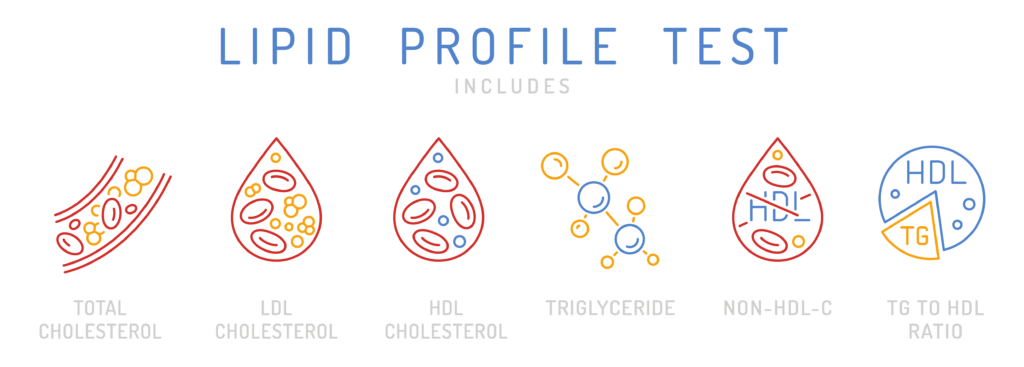
In a standard cholesterol test, your doctor usually measures four key values:
LDL Cholesterol (often called the “bad” cholesterol) – carries fats from the liver to the rest of the body. When there is too much LDL in the blood, it can build up in the walls of your arteries, leading to narrowing and atherosclerosis (hardening of the arteries).
HDL Cholesterol (known as the “good” cholesterol) – acts as a cleaner by removing excess cholesterol from the blood vessels and transporting it back to the liver, where it is broken down. A higher HDL level is therefore beneficial.
Triglycerides – are fat-like substances that your body uses as an energy source. High triglyceride levels can also contribute to cardiovascular disease, similar to LDL cholesterol.
Total Cholesterol – represents the sum of all cholesterol types combined. A high total value does not tell the full story, as it is important to know how much of it is LDL and how much is HDL.
However, what is often missing from the standard lipid profile is the measurement of Lipoprotein(a), or Lp(a).

Testing for Lp(a)
Lp(a) is the genetic variant of LDL cholesterol, containing an extra protein called apolipoprotein(a) that increases the likelihood of arterial calcification, inflammation, and clot formation. An elevated Lp(a) level can therefore pose additional cardiovascular risk, even if all your other cholesterol values appear normal. By measuring Lp(a) alongside your standard cholesterol profile, you gain a more complete picture of your heart health. In some cases, people with normal LDL levels are found to have a significantly higher risk of heart disease because their Lp(a) is elevated.
Main reasons to test Lp(a):
- A high Lp(a) level causes no symptoms, so many people are unaware that theirs is elevated.
- Lp(a) can be elevated even when regular cholesterol levels appear normal.
- Elevated Lp(a) increases the risk of cardiovascular disease two- to fourfold.
- The value does not change through lifestyle or diet, so one measurement is sufficient.
- Detecting high Lp(a) early makes it possible to take targeted action and alert family members who might carry the same risk.
- An Lp(a) test offers a comprehensive view of your cardiovascular health, helping uncover genetic risks long before problems arise.
How an Lp(a) test works
An Lp(a) test is a blood test that measures the amount of lipoprotein(a) in your blood. The test can be performed using a simple, lab-certified finger-prick at-home test or through a blood draw at a medical laboratory. In both cases, the analysis is carried out in an accredited and certified laboratory. The test determines how many Lp(a) particles are present in your blood, typically expressed as:
- nmol/L (nanomoles per liter) – the number of Lp(a) particles.
- mg/dL (milligrams per deciliter) – the weight of Lp(a) in the blood.
Laboratories use an immunoassay, a precise method that specifically measures the apolipoprotein(a) protein. Test results are usually available within a few days.
Testing at home or through your doctor
Both home testing and doctor-supervised testing provide reliable results. The best option depends on your personal preference and medical situation.
At-home test
An Lp(a) home test is performed using a simple finger-prick blood sample that you collect yourself. It can also be part of a comprehensive cholesterol panel, including total cholesterol, LDL, HDL, and triglycerides.
- The sample is analyzed in an accredited laboratory, ensuring reliable results.
- No appointment is needed, and you’ll receive your results quickly — either by post or through a secure online medical portal.
- Accuracy is high, provided the test is CE-certified and performed correctly.
- Home testing is convenient, comfortable, and ideal as a first step when you want quick insight into your Lp(a) level.
Testing through your doctor
- The test can also be performed through a blood draw at your doctor’s office or a local blood collection center.
- Reliability is equally high, with strict quality and validation checks in place.
- The test can be combined with a full lipid profile, including total cholesterol, LDL, HDL, and triglycerides.
A laboratory test is particularly suitable for medical evaluation, risk assessment, or as a follow-up to a home test.
Conclusion
Both methods are accurate and recommended. A home test offers convenience, speed, and comfort, while a doctor’s test may provide additional context and medical follow-up. For many people, a home test is a logical first step toward understanding their Lp(a) level.

What do Lp(a) test results mean?
International reference values:
- < 75 nmol/L (or < 30 mg/dL) → Normal risk
- 75–125 nmol/L (30–50 mg/dL) → Moderately increased risk
- > 125 nmol/L (or > 50 mg/dL) → Elevated risk
- > 250 nmol/L (or > 100 mg/dL) → Strongly elevated risk (often genetic)
Your test result shows how your genetic cardiovascular risk compares to that of the general population. Your doctor can interpret this value together with other factors such as LDL cholesterol, blood pressure, blood sugar, and family history to assess your overall cardiovascular risk.
When and how often should you test?
Because Lp(a) is genetically determined, it usually only needs to be tested once in your lifetime. The value does not change with diet, age, or medication.
However, (re)testing may be useful if:
- New and more accurate test methods become available.
- You are participating in a clinical study or treatment with Lp(a)-lowering medication.
- Family members have recently been tested, and genetic elevation has been identified.
For people with strongly elevated Lp(a) and a family history of cardiovascular disease, doctors may recommend regular monitoring of a full lipid profile, including LDL, HDL, triglycerides, and total cholesterol. This ensures that any changes are detected early and that preventive treatment can start promptly if overall risk increases.
Sources
Scientific sources and medical references. The information on this page about the measurement of lipoprotein(a), inherited cardiovascular risk, and the interpretation of Lp(a) values is based on the following publications:
Nordestgaard BG, Langsted A.
Lipoprotein(a) as a cause of cardiovascular disease: insights from epidemiology, genetics, and biology.
Journal of Lipid Research, 2016.
Comprehensive review describing the epidemiological, genetic, and biological evidence that establishes lipoprotein(a) as a causal risk factor for cardiovascular disease and supports the rationale for measuring Lp(a) in clinical practice.
https://pubmed.ncbi.nlm.nih.gov/27677946/
Kronenberg F, Mora S, Stroes ESG, et al.
Lipoprotein(a) in atherosclerotic cardiovascular disease and aortic stenosis: A European Atherosclerosis Society consensus statement.
European Heart Journal, 2022.
Authoritative European consensus statement outlining indications for Lp(a) testing, risk thresholds, genetic background, and clinical interpretation of Lp(a) levels in cardiovascular risk assessment.
https://pubmed.ncbi.nlm.nih.gov/36036785/
Marcovina SM, Koschinsky ML.
Lipoprotein(a) measurements for clinical application.
Journal of Lipid Research, 2016.
Detailed methodological review focusing on laboratory measurement of Lp(a), assay standardization, reporting units (nmol/L vs mg/dL), and implications for accurate clinical interpretation.
https://pubmed.ncbi.nlm.nih.gov/26637278/
American College of Cardiology.
An Update on Lipoprotein(a): The Latest on Testing, Treatment, and Guideline Recommendations.
ACC.org, 2023.
Up-to-date clinical overview summarizing current recommendations on when to measure Lp(a), how to interpret results, and how Lp(a) fits into modern cardiovascular risk management and emerging therapies.
https://www.acc.org/Latest-in-Cardiology/Articles/2023/09/19/10/54/An-Update-on-Lipoprotein-a

 NL - Nederlands
 EN - English
 DE - Deutsch