


People with type 1 or type 2 diabetes already face an increased risk of cardiovascular disease. When an elevated Lipoprotein a level is also present, that risk rises significantly. That’s why it’s essential to know and monitor both values regularly.
Global scale of diabetes
- Worldwide, approximately 589 million adults aged 20-79 years are living with diabetes.
- Among them, type 1 diabetes affects around 8.4 million people globally in 2021.
- Given that type 2 diabetes accounts for the vast majority of cases, the implication is that hundreds of millions of people are living with the combined risk factors of diabetes + elevated Lp(a).
How diabetes and Lp(a) together intensify cardiovascular risk
Diabetes damages blood vessels due to prolonged high blood sugar levels, making the artery walls more fragile. Lp(a) adds further harm by triggering inflammation and increasing the tendency for clot formation. Together, they accelerate atherosclerosis and raise the likelihood of heart attacks, strokes, and valve calcification.
What you can do
- Have your cholesterol, blood sugar, and Lp(a) checked regularly to detect risks early.
- Keep your blood pressure, weight, and lifestyle in balance and follow a healthy Mediterranean style diet.
- Discuss with your doctor whether a comprehensive lipid profile including Lp(a) is advisable — especially if you have type 1 or type 2 diabetes.
Why measuring Lp(a) matters in diabetes
Lp(a) testing provides crucial information that is not visible in standard cholesterol or glucose tests. Because both diabetes and Lp(a) independently damage the vascular system, identifying an elevated Lp(a) can help guide more targeted prevention and treatment — such as intensified cholesterol management or lifestyle interventions. By combining regular diabetes care with Lp(a) awareness, you can significantly reduce your long-term risk of cardiovascular disease.
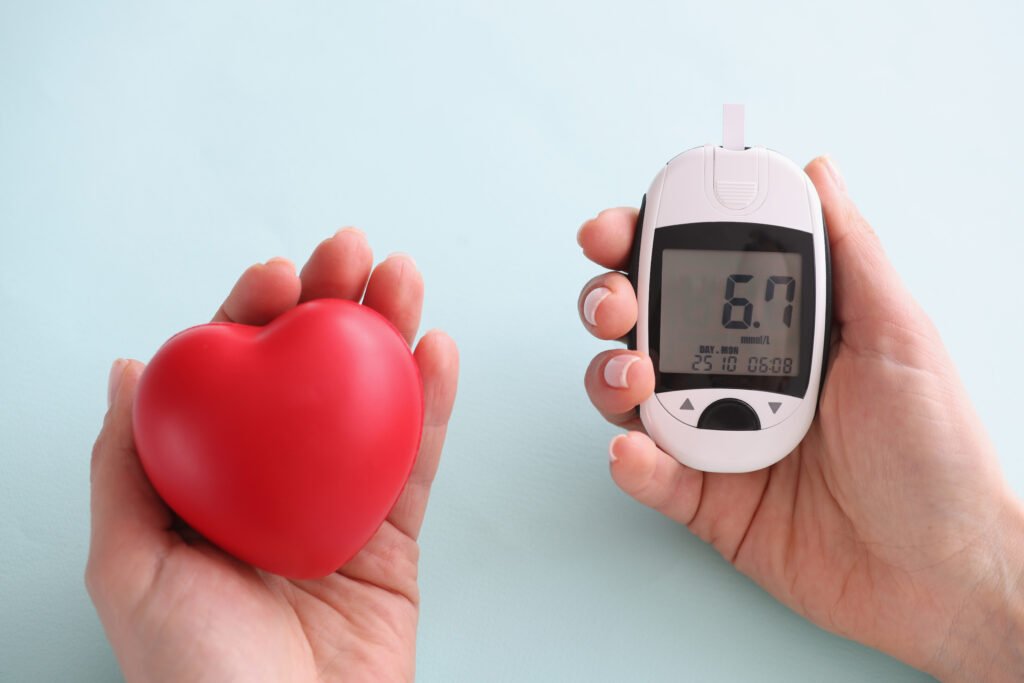
Why measuring Lp(a) matters in diabetes
An Lp(a) test reveals whether your cardiovascular risk is driven mainly by genetic factors or by blood sugar and lifestyle influences. This distinction is crucial, because the treatment approach differs for each. For people with well-controlled blood sugar levels who still develop heart problems or arterial narrowing, elevated Lp(a) may be the hidden cause. By measuring Lp(a), doctors can better determine how aggressively cholesterol and other risk factors should be managed to prevent further vascular damage.
What you can do if you have diabetes and elevated Lp(a)
- Keep your LDL cholesterol as low as possible.
- Monitor your blood pressure and blood sugar regularly.
- Eat a heart-healthy diet, avoid smoking, and stay physically active every day.
- Consider an Lp(a) test as part of your routine diabetes check-up.
By combining good diabetes management with awareness of your Lp(a) level, you can significantly reduce the long-term risk of heart and vascular disease.
Sources
Scientific sources and medical references. The information on this page about diabetes, lipoprotein(a), and cardiovascular risk is based on reliable medical and scientific sources.
Diabetes Care (2023) – Scientific publications on diabetes and cardiovascular risk.
https://diabetesjournals.org/careDutch Heart Foundation (Hartstichting) – Diabetes and cardiovascular disease.
https://www.hartstichting.nl/hart-en-vaatziekten/diabetesEuropean Heart Journal (2023) – Lipoprotein(a), lipids, and cardiovascular risk.
https://academic.oup.com/eurheartjErasmus MC – Research on lipids and hereditary cardiovascular risk factors.
https://www.erasmusmc.nlDutch College of General Practitioners (NHG) – Guideline on cardiovascular risk management (CVRM).
https://richtlijnen.nhg.org/standaarden/cardiovasculair-risicomanagement

 NL - Nederlands
 EN - English
 DE - Deutsch