


Lipoprotein(a) is a cholesterol-carrying particle in the blood. Your Lp(a) level is determined by your genes. Although Lp(a) looks similar to the well-known LDL cholesterol, its structure is different – and so is its effect on the body.
Lp(a) levels are mainly determined by genetics and hardly change through diet, lifestyle or exercise. That’s why Lp(a) is considered an independent risk factor for cardiovascular disease, separate from other factors such as high blood pressure, smoking or diabetes.
What exactly is Lipoprotein(a)?
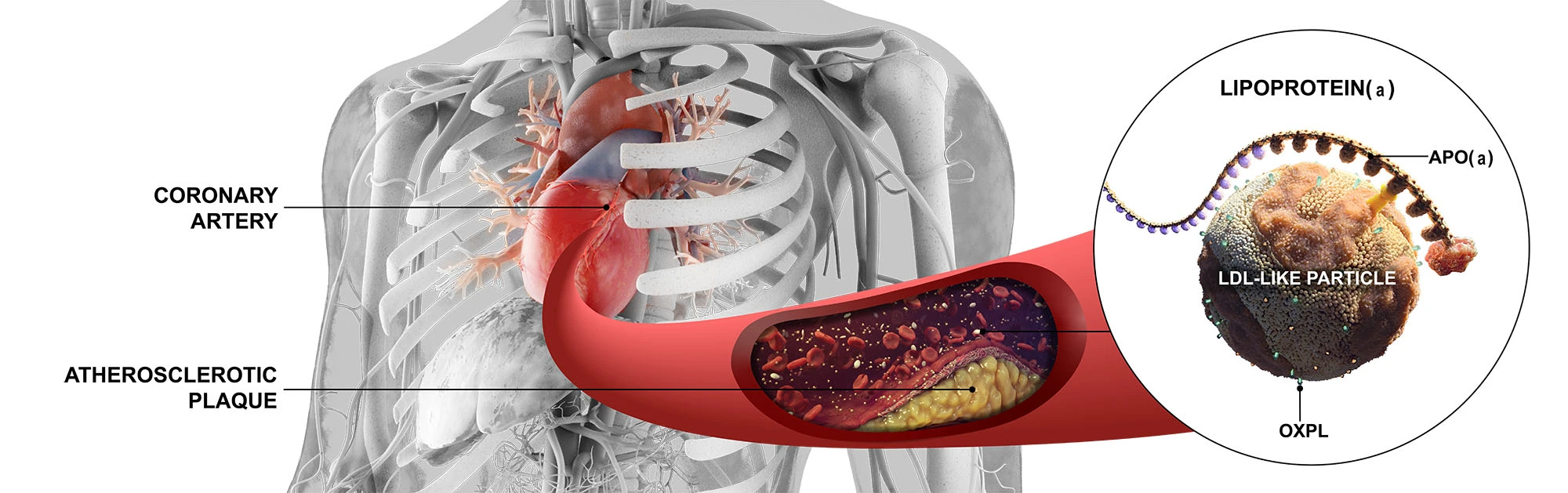
Lp(a) is a complex particle made up of two main components:
- An LDL particle (low-density lipoprotein), which carries cholesterol through the blood.
- An additional protein component called apolipoprotein(a), which is firmly attached to the LDL particle.
This unique structure makes Lp(a) different from regular LDL cholesterol and explains why it poses a greater risk for heart and vascular disease.
Genetically determined and stable throughout life
The amount of Lp(a) in your blood is determined by your DNA, specifically by the LPA gene. Everyone is born with a certain Lp(a) level, which remains virtually constant from an early age.
This means that lifestyle, diet or medication have little to no effect on Lp(a). A single blood test is usually enough to know whether someone has an elevated level and therefore an increased risk. Those with high Lp(a) levels typically retain them for life making early detection essential.
The role of Lp(a) in the blood
Lp(a) serves several functions in the body, but when concentrations become too high, it can harm your heart and blood vessels.
1. Transport of fats and cholesterol – Just like LDL cholesterol, Lp(a) carries fats and cholesterol through your blood. When there’s too much Lp(a), it can start to build up inside the walls of your arteries, especially in areas that are already slightly damaged or inflamed.
2. How Lp(a) contributes to plaque build-up in the arteries – The protein component of Lp(a), called apolipoprotein(a), makes it much stickier than regular LDL cholesterol. This allows Lp(a) to attach more easily to the walls of blood vessels, where it can trigger inflammation and promote the buildup of fatty plaques. Over time, these plaques narrow the arteries and restrict blood flow to the heart and brain.
3. How Lp(a) affects blood clotting – Lp(a) closely resembles a natural protein called plasminogen, which normally helps the body dissolve blood clots. Because of this similarity, Lp(a) can interfere with that process, causing clots to break down more slowly. This increases the likelihood of blockages in the arteries and raises the risk of thrombosis, heart attack, or stroke.
4. Inflammatory reactions and oxidation – Lp(a) particles contain substances called oxidized phospholipids (OxPLs) that irritate and inflame the walls of blood vessels. Over time, this inflammation can weaken the plaques that build up in the arteries, making them unstable and more likely to burst. When this happens, a blood vessel can become suddenly blocked, leading to a heart attack or stroke.
In summary
Lp(a) is much more than just a cholesterol particle – it actively contributes to the processes that damage your arteries. It can trigger inflammation, promote plaque formation, and interfere with the body’s ability to dissolve blood clots. Together, these effects can significantly increase the risk of heart attack, stroke, and other cardiovascular problems.
Knowing your Lp(a) level gives you a deeper understanding of your genetic heart risk and allows you to take timely, targeted steps to protect your heart health.
The impact of Lp(a) on heart health
Lp(a) is a type of cholesterol particle that is largely determined by your genes. High Lp(a) levels are now recognized as one of the most important — yet often overlooked — risk factors for cardiovascular disease. Unlike LDL cholesterol, Lp(a) is inherited and remains stable throughout life, meaning lifestyle changes such as diet or exercise have little effect on it.
Elevated Lp(a) can quietly increase the risk of:
- Heart attacks, even in people with normal cholesterol levels.
- Aortic valve calcification (aortic stenosis), which can gradually strain the heart.
- Artery narrowing or stroke at a younger age than usual.
Lp(a) is not part of a standard cholesterol test, so many people don’t know their levels are elevated. This hidden risk means that even those with a healthy lifestyle and normal cholesterol results could still face an increased chance of heart or vascular disease.

When and who should be tested for Lp(a)
A simple, one-time blood test can determine your Lp(a) level and reveal whether you carry a genetic predisposition to cardiovascular disease. Testing is especially important for people who:
- Have a family history of early heart disease or stroke (before age 55 in men or 65 in women).
- Have experienced heart or vascular problems despite normal cholesterol levels.
- Live with type 1 or type 2 diabetes, which already increases cardiovascular strain.
- Have high LDL cholesterol or familial hypercholesterolemia (FH) — the combination with high Lp(a) greatly amplifies risk.
- Simply want to understand their genetic risk profile and take preventive action.
Because your Lp(a) level is determined by your genes and hardly changes, one blood test is usually enough to understand your lifelong risk.
Why knowing your Lp(a) level matters
Early awareness empowers you and your doctor to take preventive steps — from more tailored cholesterol management to closer monitoring of heart and vascular health. Identifying an elevated Lp(a) level can also prompt family screening, since high Lp(a) often runs in families.
By understanding your Lp(a) level, you gain valuable insight into your personal cardiovascular risk and can take action before problems develop. Order online or ask your doctor about an Lp(a) test today, one simple check can make a lifetime of difference.
Sources
Scientific sources and medical references. The information on this page about lipoprotein(a), heredity, biological mechanisms, and the risk of cardiovascular disease is based on the following key publications:
Nordestgaard BG, Chapman MJ, Ray K, et al.
Lipoprotein(a) as a cardiovascular risk factor: current status.
European Heart Journal, 2010.
Landmark review establishing Lp(a) as an independent, genetically determined risk factor for cardiovascular disease and describing its underlying biological mechanisms.
https://pubmed.ncbi.nlm.nih.gov/20688899/
Kronenberg F, Mora S, Stroes ESG, et al.
Lipoprotein(a) in atherosclerotic cardiovascular disease and aortic stenosis: A European Atherosclerosis Society consensus statement.
European Heart Journal, 2022.
European consensus document on heredity, pathophysiology, testing indications, and the clinical relevance of Lp(a).
https://pubmed.ncbi.nlm.nih.gov/36036785/
Reyes-Soffer G, Ginsberg HN, Berglund L, et al.
Lipoprotein(a): A genetically determined, causal, and prevalent risk factor for atherosclerotic cardiovascular disease.
Arteriosclerosis, Thrombosis, and Vascular Biology, 2022.
Scientific overview explaining the role of Lp(a) in atherosclerosis, inflammation, and thrombosis.
https://www.ahajournals.org/doi/10.1161/ATV.0000000000000147

 NL - Nederlands
 EN - English
 DE - Deutsch